
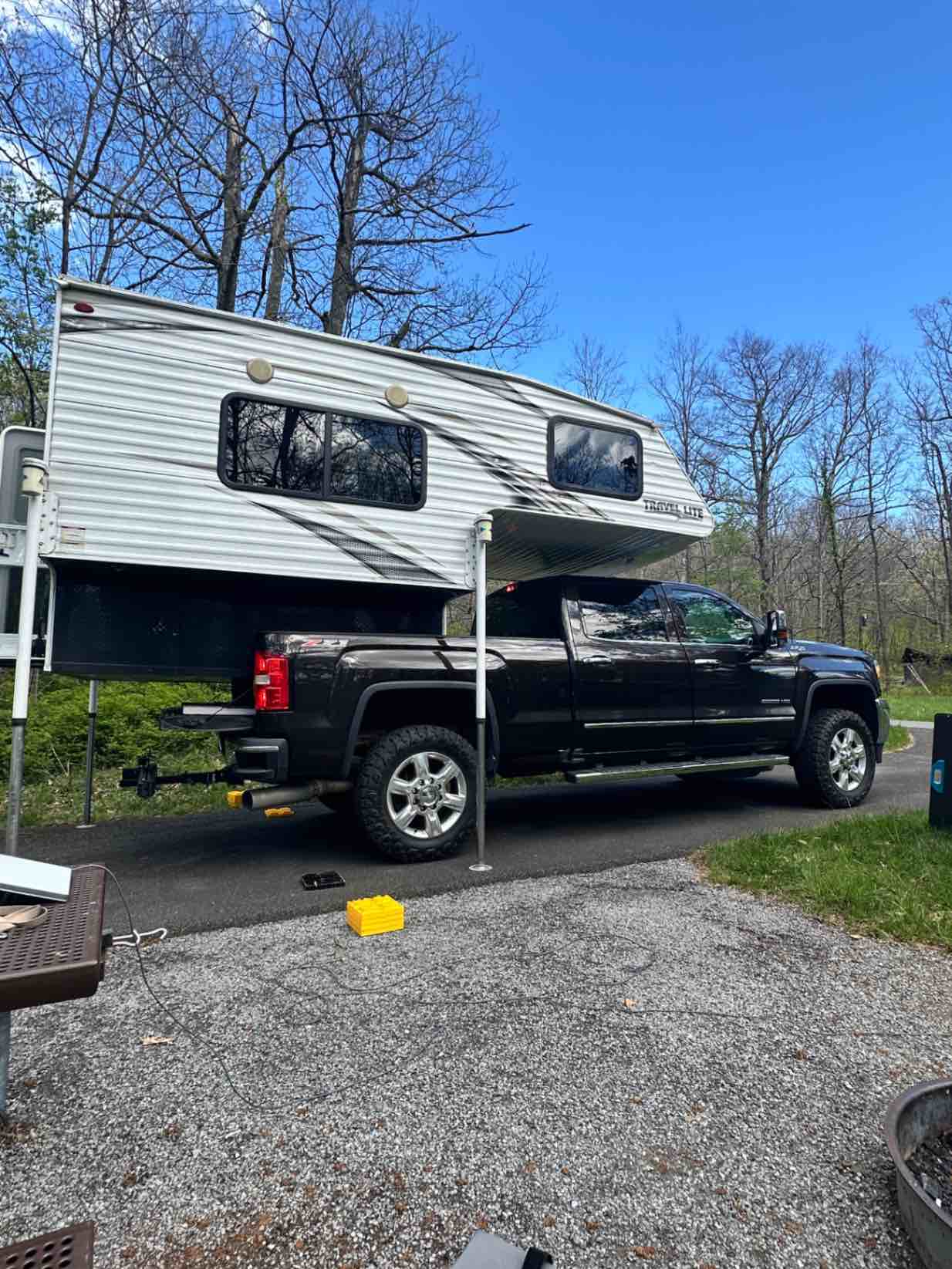
We don’t usually camp in campgrounds.
We like dirt roads, quiet mornings, and not making eye contact with another human for 48 hours.
But this weekend? We had specific hikes we wanted to do — and there’s not a lot of dispersed camping near the northern side of Shenandoah National Park.
And leaving your dispersed camping spot to go hike is… risky.
Like “hope you enjoy finding a new spot in the dark when you get back” risky.
So — campground it is.
And I’ll be honest… camping in a campground with dogs is a little different.
Not in a bad way — just different.
🏕️ Why We Sometimes Choose Campgrounds
We mainly stay in campgrounds when:
- We have specific hikes planned
- Dispersed camping isn’t easily accessible
- Or we just don’t feel like playing campsite roulette
Campgrounds make things simpler. You show up, you have a spot, and you don’t spend your evening driving down questionable forest roads hoping it works out.
Not every trip needs to be a survival challenge.
We use Recreation.gov to find great National Park Campgrounds!
✔️ What We Look for in a Campground
When we are camping in a campground with dogs, we’re a little picky — because the vibe matters.
1. Space (aka please don’t breathe on me)
We are not interested in camping shoulder-to-shoulder with someone else.
It’s chaotic. It’s loud. And next thing you know, Jingle is identifying himself as one of them and helping himself to their camper snacks.
(Not really… but also… absolutely yes, really.)
We look for:
- Smaller campgrounds
- Spread-out sites
- Or at least enough open space that we don’t feel stacked like sardines
Some national park campgrounds have 30 sites. Some have 100.
We don’t care — as long as we’re not basically sharing a fire pit with strangers.
2. Proximity to the trailhead
If we’re staying in a campground, we’re there to hike.
So we try to stay within about an hour of the trailhead.
This keeps mornings easy and avoids turning your hike day into a full-blown road trip before it even starts.

3. Easy setup (this is the underrated perk)
One of the best parts of campground camping?
Level ground.
Most campgrounds have:
- Asphalt pads
- Concrete pads
- Or at least decent gravel
Which means unloading the camper is significantly easier.
And if you’ve ever dealt with leveling issues (👀 looking at you, fridge drama), you know this matters.
👉 If you’re interested in our 15 min Camper Setup Routine, you can read that post here.
Why We Sometimes Unload the Camper
When we have bigger hikes planned, we’ll often offload the camper and just take the truck.
This makes life so much easier:
- Better parking at trailheads
- Easier driving on tight roads
- Less stress overall
And honestly… campground infrastructure makes this feel way safer and more manageable than doing it off-grid.
🐶 Leaving the Dogs in the Camper (Let’s Talk About It)
This is one of the biggest differences when camping in a campground with dogs.
If we have a harder hike planned, we may leave the dogs in the camper.
But there are a few non-negotiables:
- Our dogs are extremely comfortable in the camper
- They do NOT bark excessively
- We have a camera to check on them
- Temperatures are safe
- We’re not gone for an unreasonable amount of time
And this is important:
👉 Do not leave your dog if they are not comfortable in that space.
👉 Do not leave your dog if they’re going to bark all day.
Nothing will make you enemies faster than forcing your neighbors to listen to “Max” bark for 6 hours straight.
We also always check campground rules — some places don’t allow unattended pets at all.
And honestly? That’s fair.
🐕 What We Do Differently with Dogs in a Campground
This is where things really shift.
1. Leash & Harness. Always.
Most campgrounds require dogs to be leashed at all times — and for good reason.
Unlike dispersed camping, you can’t control your environment.
There are:
- Other dogs
- Kids on bikes
- People walking by constantly
And while our dogs are friendly… not all dogs are.
Being respectful here matters.
Leashes and Harnesses are part of our Dog Packing List that we bring on every. single. trip.
We love Ruffwear and Kurgo Harnesses.
Jingle wears a Kurgo harness that is perfect for the littles, and Lulu wears a Ruffwear harness that is an awesome piece of gear for any adventure pup.

2. More awareness, less “free range”
When we’re boondocking, the dogs have a bit more freedom.
When we’re in a campground?
We’re way more aware of:
- Who’s around
- What’s happening
- What might trigger them
Because campground life = constant stimulation.
I go into more detail about our normal “camping with dogs” strategy in my post Camping With Dogs: What Actually Works.
3. Managing the chaos
Campgrounds are busy.
There’s always something happening:
- Doors slamming
- People walking
- Dogs barking
- Someone trying (and failing) to back into a site
So we:
- Keep the dogs closer
- Redirect quickly if they get worked up
- Don’t let them sit and monitor every single passerby
Because if you let them… they will.
🧠 The Biggest Adjustment: Letting Go of “Perfect Campsite Energy”
One of the biggest mindset shifts for us when camping in a campground with dogs is letting go of the expectation that everything is going to feel calm and quiet.
Because… it’s probably not.
There are going to be:
- People walking by your site
- Dogs barking (sometimes a lot)
- Car doors slamming
- Kids riding bikes like they’re training for the Tour de France
And honestly? That used to bother me more.
When you’re used to dispersed camping, where it’s just you, the trees, and your own little bubble… campgrounds can feel like a lot.
But once we stopped expecting it to feel the same — and just leaned into what it is — it got a lot more enjoyable.
Now we treat campground trips differently:
- More structured
- More activity-focused
- Less about “perfect peaceful vibes”
And weirdly… that shift makes it feel easier.
Because instead of being annoyed that it’s not quiet, we just accept that it’s a different kind of trip — and plan accordingly.

🌲 What We Actually Like About Campgrounds
Even though we’re dirt road people… campgrounds do have their perks:
- Easy setup
- Bathrooms (huge win)
- Sometimes showers (!!)
- Power without thinking about it
- A little bit of people watching entertainment
There’s something oddly humbling about watching a 35-foot rig try to back into a tight site while six people give completely different directions.
⚖️ Campgrounds vs. Boondocking (Quick Reality Check)
Campgrounds:
- Easier
- More structured
- Better for short, activity-focused trips
Boondocking:
- More freedom
- More space
- Better for letting dogs relax
We love both — they just serve different purposes.
💬 Final Thoughts
We’ll always love a quiet dirt road more than a crowded campground loop.
But campground trips have their place.
You just have to adjust your expectations — and your dog strategy.
What do you like better? Campgrounds or boondocking?